

How Learning Changes Experience
Consciousness, adaptation, and the frames that make the familiar new


If consciousness involves adaptation, then learning cannot be far away. In deliberate learning, we typically act to become conscious of the material to be learned. Yet most of the detailed work of learning proceeds unconsciously.
That contrast is not accidental. It may tell us something important about the function of conscious experience.
Learning of all kinds is surely the most obvious adaptive mental process in which people engage. Information and learning are closely related. Classical conditioning has long been understood in terms of the informative features of the conditioned stimulus. More recent models of human learning also rely on rules that maximize the amount of information given by one event about another. Such models often have no explicit role for conscious experience. But they may be moving in that direction.
From a theoretical point of view, we should expect consciousness to be involved in learning novel events, or novel connections between known events. Novel connections require unpredictable interactions among specialized processors. Hence some form of global communication is needed, from one specialist system to another. Widespread broadcasting serves to make that kind of any-to-any connection possible.
Perhaps the most obvious evidence is the radical simplicity of the act of learning. To learn anything new, we merely pay attention to it. Learning occurs almost “magically.” We allow ourselves to interact consciously with algebra, with language, or with a perceptual puzzle, and somehow, without detailed conscious intervention, we acquire the relevant knowledge and skill.
But we know that learning cannot be a simple, unitary process in its details. A perceptual puzzle may require subtle and sophisticated visual and spatial analysis. Language requires highly specialized analysis of sound and syntax. Indeed, all forms of learning involve specialized components, sources of knowledge, and acquisition strategies. These details of learning are generally unconscious when they operate most effectively.
The key step in deliberate learning is to become conscious of precisely what is to be learned. Doing this is often sufficient for learning to take place. In recognition memory studies, for example, if people are simply made to pay attention to some material as an incidental task, memory for that material may remain quite good even much later, provided that the material is distinctive enough not to be confused with similar material.
Thus consciousness seems to facilitate learning. Whether consciousness is always a necessary condition for learning is a more difficult question.
But we are driven by this line of thought to a rather radical position. Very often conscious involvement in learning leads to adaptation, and adaptation alters the context of experience. But a change in context, in turn, alters subsequent experience.
It follows that learning alters the conscious experience of the learned material.
Evidence for this position seems strong for perceptual learning, knowledge acquisition, skill learning, immediate memory, episodic memory, and rule learning. It may be more debatable for associative learning. But even there, the question is worth asking.
If learning involves the generation of new frames, and if frames shape and bound conscious experiences, then we experience the same material in a different way after learning. We talk about algebra as “the same thing” before and after learning it. We talk about a hidden figure in a perceptual puzzle as the same “thing” before and after comprehension. But both algebra and the hidden figure are experienced differently after learning.
Perceptual learning certainly changes the experience of the stimulus. Children may experience the perceptual world differently after acquiring object permanence. Native speakers of a language can often discriminate phonetic distinctions that foreigners cannot hear. Most English speakers simply cannot hear the Chinese tonal system. Even in learning to comprehend a puzzling sentence, there is a change in experience. In the familiar “I scream/ice cream” example, the perceived word boundaries switch back and forth. Indeed, one of the great difficulties in learning a foreign language is learning to perceive word boundaries.
Conceptual learning has the same character. The kind of learning a student of science undergoes in learning physics clearly involves a change in perspective and insight into the field. The announcement of a new subnuclear particle must lead to a different experience of comprehension for an advanced physicist than for a novice.
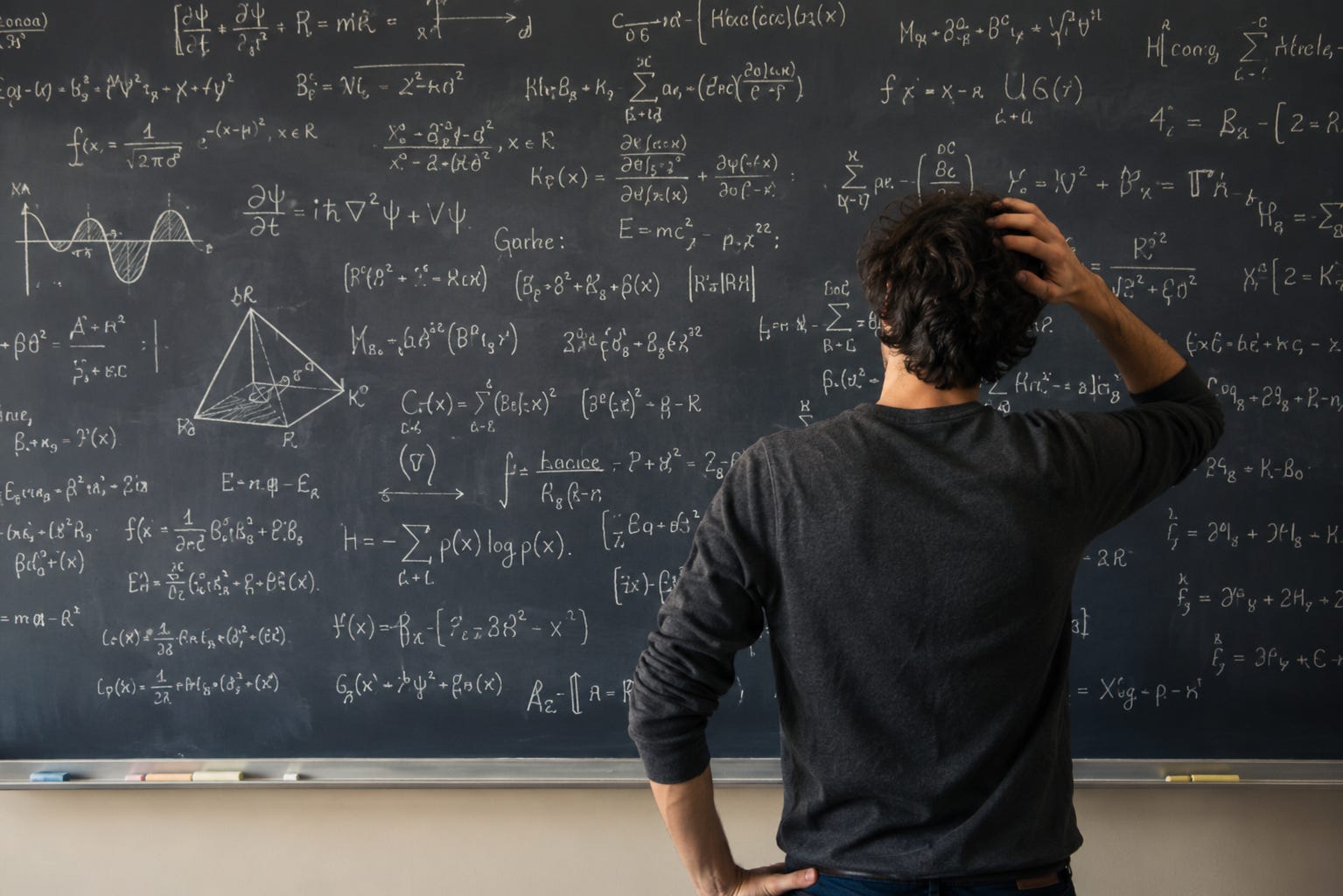
What about associative learning? When we need to discover the connection between two known stimuli, or between a known stimulus and a known response, is there a change in conscious experience?
This is not so clear. Perhaps the strongest evidence comes from a series of studies by Dawson and Furedy on galvanic skin response conditioning. In standard conditioning, a stimulus is given, such as a tone, followed by a shock, which elicits a change in skin conductivity. Under ordinary circumstances, conditioning occurs.
But Dawson and Furedy changed the subject’s mental set about the stimulus sequence. Subjects were told that the task was to detect a tone in noise, and that the shock served only to mark the boundaries of the trials. Experimental subjects will believe almost anything.
That is, the same physical stimulus sequence was now interpreted in a different way. Instead of tone-shock, tone-shock, tone-shock, the subjects experienced it as shock-tone, shock-tone, shock-tone. Under these circumstances, the tone no longer served as a signal for the shock. And indeed, though the stimulus conditions were unchanged, conditioning failed to take place.
What does this mean for the question of changing experience? We still do not know whether associative learning changes the experience of the learned connection. However, these studies show that if we experience stimuli such that the tone does not seem to signal the shock, learning will not occur.
It may therefore be that the distinction between “associative learning” and “knowledge acquisition” is a false distinction. All learning takes place within a knowledge frame that defines the relationships between stimuli. If that is true, learning changes this knowledge frame even in the case of associative learning.
This somewhat radical hypothesis about learning has a perplexing implication.
If we experience an event differently after learning, why do we still think of it as the same event? How do we maintain event identity before and after learning?
This is a profound and difficult question. William James raised it in his own way. Thomas Kuhn raised it in the context of scientific constructs after a paradigm shift. Scientific constructs like gravity and light are quite different in Relativity Theory as compared to Newtonian physics. Yet they are called by the same names, and they are often naively believed to be the same things.
Many physical observations relevant to light and gravity are unchanged, of course. But not all. Some new relationships are added with the coming of Relativity Theory, the bending of light by gravity, for example. Nonetheless, construct identity is maintained, at least in the sense that many physicists believe that in the Einsteinian framework they are simply understanding “the same thing” in a deeper way.

The general implication is that event identity is a function not only of the observations in question, but of the entire knowledge frame in which the event is defined.
This is not just true in physics. It is true in perception, in conceptual learning, and probably in learning generally.
Learning does not merely add new contents to memory. It changes the frame within which later contents are experienced.
In that sense, learning changes not only what we know. It changes the experienced world itself.
I like the distinction here between learning as stored information and learning as a change in the frame of experience. The same event may remain outwardly identical, yet after learning, we no longer meet it in the same way. That makes learning feel less like accumulation and more like a quiet reorganization of the world as it becomes available to consciousness.
Humans beings are learning animals.
Learning takes effort.
One thing we can intentionally do is to keep trying.
Keep trying to learn to make the world a better place for all living beings.